
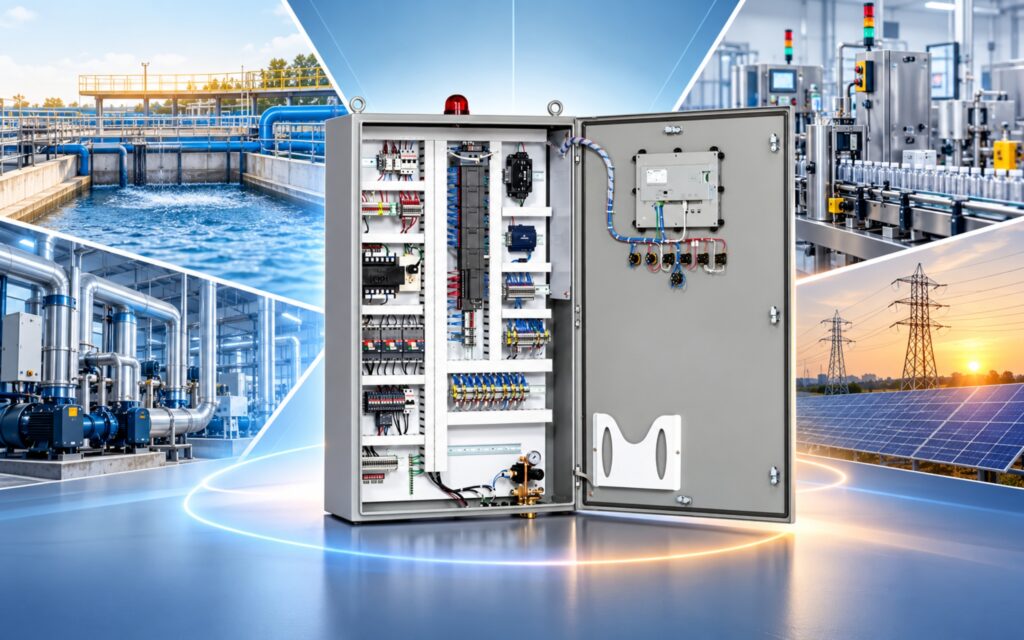
Industrial machinery relies on reliable electrical and control systems to operate equipment efficiently and consistently. Control Panels for Industrial Machinery provide a centralized arrangement for electrical and control components, helping manage machine functions while keeping wiring and components organized and protected.
The right control panel depends on the machinery, electrical requirements, operating environment, enclosure requirements, and maintenance needs. For manufacturers and industrial project teams, selecting a suitable panel is therefore an important part of developing a dependable machine control system.
What Are Control Panels for Industrial Machinery?
A control panel is an enclosure that houses electrical and control components used to operate and manage industrial equipment. Depending on the machinery and application, a panel can accommodate different components required for switching, control, circuit protection, electrical connections, and machine operation.
Unlike a standard enclosure used primarily to house equipment, an industrial machinery control panel is configured around the functional requirements of the machine. Its internal arrangement, wiring, component selection, and enclosure design can therefore vary from one application to another.
Key Components of an Industrial Machinery Control Panel
The components installed inside a control panel depend on the machine and its control requirements. Common components can include:
Circuit Protection Components
Protection components help manage electrical circuits and provide protection appropriate to the electrical system and connected equipment.
Contactors and Relays
Contactors and relays are commonly used for switching and controlling electrical circuits associated with machinery.
Terminal Blocks
Terminal blocks provide organized connection points for incoming and outgoing wiring, helping simplify panel wiring and maintenance.
Control Components
Control components allow different machine functions to be operated according to the requirements of the equipment and its control system.
Electrical Enclosure
The enclosure provides a structured housing for the internal components and helps protect them from the surrounding installation environment.
The exact configuration should always be determined according to the machinery design and electrical requirements of the project.
How Control Panels Support Industrial Machinery
Industrial machinery can involve multiple electrical circuits and control functions that need to work together. A properly configured control panel provides a centralized location for these components and helps create an organized control system.
Centralized Machine Control
A control panel brings relevant electrical and control components together, allowing machinery functions to be managed through an organized system.
Organized Electrical Connections
Proper component placement and wiring arrangements can make electrical connections easier to identify, inspect, and maintain.
Component Protection
The enclosure helps protect internal electrical components from the surrounding operating environment when an appropriate enclosure is selected for the application.
Easier Maintenance
An organized panel layout can make inspection, troubleshooting, and maintenance more manageable for technicians working with industrial machinery.
Applications of Control Panels for Industrial Machinery
Control Panels for Industrial Machinery can be used across a wide range of equipment and industrial environments, depending on the machine’s electrical and control requirements.
Common applications include:
- Manufacturing machinery
- Industrial automation equipment
- Production lines
- Processing equipment
- Packaging machinery
- Material handling systems
- Assembly equipment
- Industrial electrical systems
Each application can require a different panel configuration based on the machinery, connected equipment, electrical load, control functions, and installation environment.
Factors to Consider When Selecting an Industrial Control Panel
Selecting a control panel should begin with understanding the requirements of the machinery rather than choosing an enclosure based only on size or appearance.
Machinery Requirements
The panel should accommodate the electrical and control functions required by the specific machine.
Electrical Requirements
Voltage, current, connected loads, circuit configuration, and other electrical characteristics should be established according to the machinery design.
Enclosure Requirements
The enclosure should provide suitable protection for the internal components based on the environment in which the panel will operate.
Internal Component Arrangement
Logical component placement can improve wiring organization and provide better accessibility for inspection and maintenance.
Operating Environment
Dust, moisture, vibration, temperature, and other environmental conditions should be considered when determining the appropriate panel and enclosure requirements.
Maintenance Requirements
A practical panel design should allow technicians to access relevant components and connections when inspection or maintenance is required.
Control Panel Enclosures for Industrial Machinery
The enclosure is an important part of an industrial control panel because it houses and protects the electrical and control components. The appropriate enclosure configuration depends on the installation environment and the components that need to be accommodated.
For machinery installed in demanding industrial environments, factors such as environmental exposure, component protection, cable entry, mounting arrangements, and accessibility should be considered during panel selection.
A properly planned enclosure can also contribute to a more organized installation by providing a defined space for electrical components and cable connections.
Industrial Control Panels for Automation Applications
Industrial automation systems often involve multiple electrical and control functions working together. Control panels can provide the centralized arrangement required to manage these functions as part of an automated machine or production system.
For automation applications, panel configuration should be based on the equipment being controlled, the required control functions, component arrangement, wiring requirements, and operating environment.
This makes application-specific planning important when selecting Control Panels for Industrial Machinery used in automated manufacturing and production environments.
Why Choose Avinengitech for Industrial Control Panels?
Avinengitech provides control panel solutions for industrial and machinery applications with a focus on practical enclosure design, organized component integration, durability, and application requirements.
As a manufacturer of industrial electrical components, Avinengitech understands the importance of coordinating control panels with other electrical infrastructure and cable management requirements. Our product range also includes junction boxes, distribution boxes, driver enclosures, cable cleats, stainless steel cable ties, and other components used across industrial installations.
For machinery manufacturers, industrial facilities, automation projects, and EPC requirements, selecting components according to the actual application can help create more organized and maintainable electrical installations.
Frequently Asked Questions
What are control panels for industrial machinery used for?
They are used to house and organize electrical and control components required for operating and managing industrial machinery.
What components are commonly installed inside an industrial control panel?
Depending on the machinery, a control panel may contain circuit protection components, contactors, relays, terminal blocks, control components, and associated electrical connections.
How do I select a control panel for industrial machinery?
Selection should consider the machinery’s electrical and control requirements, enclosure needs, operating environment, component arrangement, cable connections, and maintenance requirements.
Why is enclosure selection important for an industrial control panel?
The enclosure provides housing and protection for the internal components. Its suitability depends on the environment, equipment configuration, and protection requirements of the installation.
Where are industrial machinery control panels used?
They can be used with manufacturing machinery, automation equipment, production lines, processing equipment, packaging machinery, material handling systems, and other industrial equipment requiring centralized electrical control.
Frequently Asked Questions
They are used to house and organize electrical and control components required for operating and managing industrial machinery.
Depending on the machinery, a control panel may contain circuit protection components, contactors, relays, terminal blocks, control components, and associated electrical connections.
Selection should consider the machinery's electrical and control requirements, enclosure needs, operating environment, component arrangement, cable connections, and maintenance requirements.
The enclosure provides housing and protection for the internal components. Its suitability depends on the environment, equipment configuration, and protection requirements of the installation.
They can be used with manufacturing machinery, automation equipment, production lines, processing equipment, packaging machinery, material handling systems, and other industrial equipment requiring centralized electrical control.

